Electric cars now have smart artificial intelligence to make the driving experience smarter. AI assistants assist drivers in controlling the functions of vehicles by a simple voice command. These intelligent systems enhance safety, navigation, comfort, and entertainment on the way to work.
During the year 2026, a considerable number of electric car manufacturers will lay a lot of emphasis on intelligent AI cockpit systems. These assistants interpret the speech and provide real-time information that is useful. Thus, electric cars with the help of AI become more and more popular on the international market.
Why AI Assistants Are Becoming Essential in EVs
The contemporary drivers desire a driving technology which makes the driving process easy and less manual. Drivers can operate systems through AI assistants without pressing screens or buttons. This enhances the safety and attention to the road.
Moreover, AI programs keep learning the preferences and habits of drivers with time. It changes routes on the navigation, music and climate options. Therefore, cars give individual driving experiences to each user.
How AI Assistants Work Inside Modern Electric Cars
AI assistants are a combination of machine learning, voice recognition and car sensors. These technologies process driver commands and intelligently control vehicle systems. The AI systems also interpret complex requests fast with the help of cloud computing.
In addition, AI assistants are linked to navigation services and apps on phones. Drivers are able to pose questions, plan routes or check weather conditions in real-time. This has caused cars to respond like smartphones instead of automobiles.
Tesla Model Series and AI Voice Assistants
Tesla is still among the most innovative electric cars in the world of AI use. Its vehicles incorporate Autopilot and voice command software that is operated by neural-network software. The system also studies on the driver behavior and enhances the performance constantly.
In certain markets, Tesla launched a voice-based system named, Hey Tesla. This assistant assists drivers with the navigation, climatic, entertainment and settings. Another application of AI in the company is to enhance self-driving skills and predicting traffic.
BMW iX and iX3 With Intelligent Personal Assistant
BMW electric cars have a strong system which is known as Intelligent Personal Assistant. The assistant is triggered when the drivers say Hey BMW when they are driving. The system is responsive to conversational answers and useful suggestions.
There are also new BMW models with improved AI including the Amazon Alexa+. This makes it possible to talk to car onboard systems in a natural manner. Drivers are able to seek navigation guidance, weather forecast, or nearby facilities without any problems.
Mercedes-Benz EQS With MBUX AI System
Mercedes-Benz created the EQS electric sedan that has a dystopian AI interface. The vehicle has the MBUX Hype screen that is large and covers the entire dashboard. This is an artificial intelligence-based system, which processes customizing vehicle settings automatically.
The AI assistant identifies voice recognition and preference of the driver in real-time. It is able to regulate climate, seat and lighting automatically. Such smart capabilities provide an advanced technology luxury driving experience.
Volvo EX60 With Gemini AI Integration
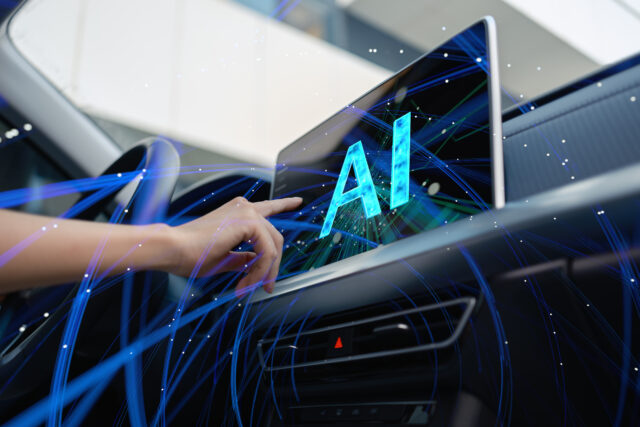
Volvo presents one of the most sophisticated AI assistants in the future EV models. It is a car that has inbuilt Google Gemini conversational AI technology. It is a system that promotes natural dialogue and smart route planning.
Through voice command, drivers are also able to handle emails, messages and calendar information. The AI assistant is intertwined with Google service and navigation tools. Thus, the car will turn into a smart digital assistant in daily commuting.
Sony-Honda Afeela 1 Smart AI Entertainment System
Sony and Honda partnered in order to develop the futuristic Afeela 1 electric cars. This vehicle is immensely interested in AI-based entertainment and connectivity capabilities. The interface of the dashboard is dominated by a huge 45-inch media display.
The automobile has artificial intelligence of immersive sound and entertainment systems. Movies, music or games can be streamed by passengers when charging stops. Thus, the Afeela 1 is a combination of high-end entertainment and intelligent cars.
Rivian R1T With AI Drive Assist
The Rivian R1T electric pickup has better machine learning driving systems. Its AI Drive Assist technology also evolves to habits and conditions of the roads. The system assists in controlling the highway driving and traffic conditions.
There is also AI with off-road and adventure navigation. The smart suggestions are offered to drivers in terms of their terrain and environmental conditions. Therefore, the Rivian R1T has not only smart driving but also outdoor capabilities.
XPeng G6 and G9 Smart AIOS Platform
The Chinese EV manufacturer XPeng pays much attention to intelligent vehicle technology. The G6 and G9 models consist of the latest AIOS software platform of the company. These cars have strong AI chips that allow them to have smart driving systems.
The vehicles will have conversational voice assistant and advanced driver-assistance. XPeng automation is done by its computing system working with large volumes of data. Hence, these cars promote sophisticated driverless functions.
Lucid Air With AI Driver Assistance
Lucid Air is one of the luxury electric vehicles that are most technologically advanced. The car has Dream Drive Pro, which is an artificial intelligence based driver assistance system. This platform involves the use of sensors, cameras and machine learning algorithms.
The use of AI technology observes the environment and anticipates possible driving risks. It also offers the intelligent navigation and adaptive cruise features in the system. Lucid Air therefore provides a high driving experience with intelligent safety features.
The Ioniq 6 electric sedan by Hyundai also includes intelligent AI driving technology. There is voice recognition and adaptive navigation in the vehicle. The features enable drivers to control routes and settings of vehicles without any difficulty.
Robots examine traffic and energy use patterns. It suggests effective paths to increase battery coverage when making journeys. As a result of this, drivers have a smarter and more efficient EV experience.
Benefits of AI Assistants in Electric Vehicles
AI assistants introduce a number of opportunities to the contemporary electric cars. First, they enhance the safety of drivers by limiting distraction in the process of driving. Voice recognition enables interaction with the vehicles without using hands.
Second, AI applications tailor driving experiences according to the preferences of users. They recollect seat arrangements, music preferences and driving styles. Lastly, AI assistants enhance efficiency by using predictive navigation and energy usage.
Challenges of AI Assistants in Cars
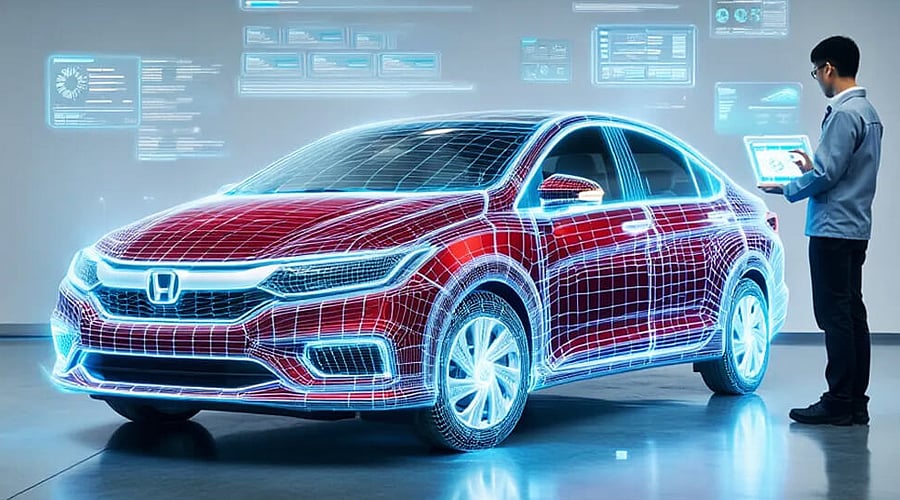
Nevertheless, AI assistants have some problems, even though they have impressive advantages. Noise in the voice recognition systems fails to interpret the commands at times. The support of the language might also be staying minimal in certain areas.
The issue of privacy also comes about when automobiles gather a lot of driver information. Manufacturers have to secure this information by means of powerful security systems. Thus, the manufacturers are still enhancing privacy and reliability.
Future of AI-Powered Electric Vehicles
Artificial intelligence technologies will be very important in the future of electric vehicles. The problem is that in the future, advanced AI assistants will work as complete digital copilots. They will simultaneously examine the road conditions, health of the drivers, and the traffic patterns.
Also, AI will assist in greater autonomous driving system levels. Cars can in the future perform most of the driving functions without involving human efforts. Therefore, electric vehicles driven by AI will change the world of transportation.
Key Takeaways
- Intelligent assistants are now part of the modern electric cars.
- Tesla, BMW, Mercedes, and Volvo are the pioneers in AI car technology.
- With AI systems, it is possible to control the voice, assist in navigation, and drive individually.
- Electric cars are becoming more and more connected with cloud computing or machine learning.
- The next generation EVs will be very dependent on AI in autonomous driving and intelligent mobility.
Conclusion
The AI wave is quickly sweeping over the global electric cars sector. Smart assistants are becoming a staple of modern EVs, serving as digital copilots. These systems make driving easier by using voice commands and intelligent automation.
Pioneering brands like Tesla, BMW, Mercedes-Benz and Volvo are pushing the envelope with AI technology. Their vehicles are equipped with a combination of machine learning, sensors and cloud computing systems. And, as a result, drivers live safer, smarter and personalized journeys.
Electric vehicles will become smarter with the advances in AI. Cars of the future will anticipate driver needs and control journeys automatically. Therefore, AI-enabled electric vehicles will define the next era of transportation.
FAQ
What is an artificial intelligence assistant in an electric car?
An AI assistant is a voice-activated computer system that controls the car functions. It also enables the drivers in easy navigation, climate, music and other controls.
What are the best AI-driven car assistants?
Examples of popular ones are Tesla models, BMW iX, Mercedes-Benz EQS, and Volvo EX60.
Are AI assistants safe to use while driving?
Yes, voice control minimizes the need to touch screens and activated controls. This keeps the driver focused on the road.
Can AI assistants recognize their driver’s preferences?
Most modern systems use machine learning to recall user habits. They adjust settings automatically for comfort, efficiency. They will also have the potential for fully autonomous driving powered by AI assistants.
Will AI assistants enable fully autonomous driving?
Future cars will have AI assistants that aid self-driving tech. Yet, the technology for fully autonomous driving still needs more development and testing.


